


Minimalist Spring Refresh: Less Stress, More Space This Season
A minimalist spring refresh wasn’t on my to-do list.
It started with that quiet, heavy feeling one morning when everything around me seemed to need attention. The kitchen counter felt crowded. The hallway felt tight. Even simple surfaces felt unfinished.
The kitchen counter felt crowded. The hallway felt tight. Even the coffee table felt like it was asking something from me.
You know that kind of morning?
When you walk into your own home and instead of exhaling, you tense up a little.
For a while, I thought I just needed better systems. Better storage. A proper deep cleaning day. The kind where you open every window and promise yourself this time it will stay that way.
But I’ve written before about how creating small calm spaces can change everything, especially in my post Your Calm Corner – How to Create a Restorative Nook at Home, and I realized something similar applies to the whole house.
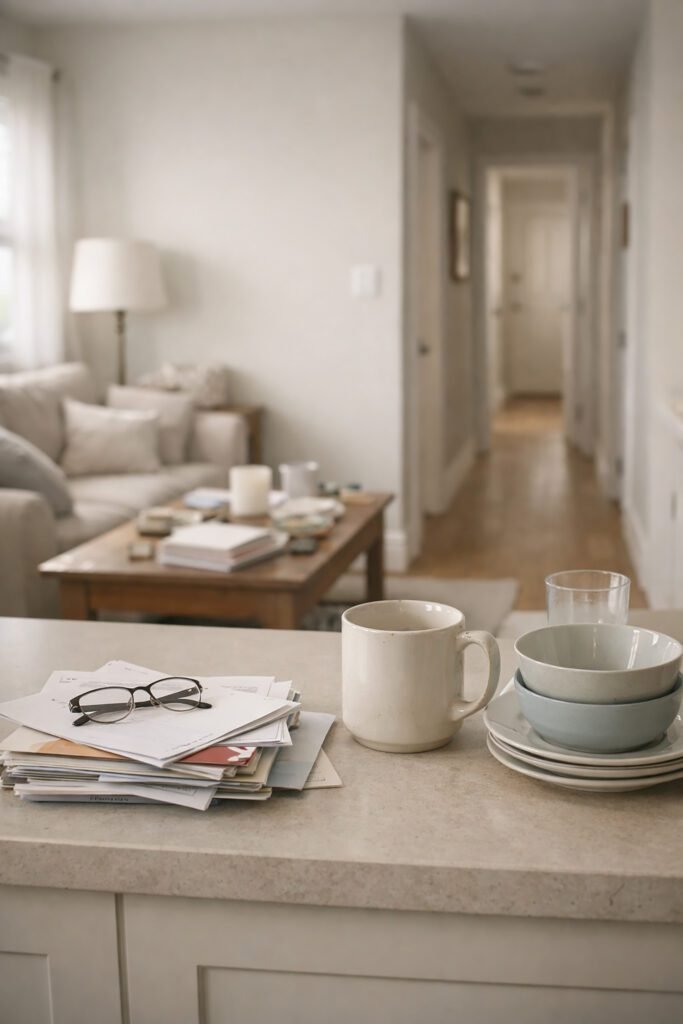
I didn’t need to clean more. I needed less.
Less visual noise. Less stuff to manage. Fewer tiny decisions waiting for me in every corner.
Because when you are already rushing through your days, the last thing you need is a home that adds more pressure. If life has felt overwhelming lately, you might relate to what I shared in How to Create a Stress-Free Japandi Home When Life Feels Overwhelming.
Your space affects your nervous system. It affects how you focus, how patient you are, even how well you sleep.
So maybe this season isn’t about scrubbing everything from top to bottom.
Maybe it’s about removing what feels heavy.
Less to look at. Less to clean. More room to breathe.
That’s what a minimalist spring refresh really is.
Why Traditional Spring Cleaning Feels Overwhelming
Traditional spring cleaning often feels intense. Long lists. Deep cleaning every corner. The idea that everything has to be done at once.
If you are already tired or stretched thin, that approach can feel unrealistic. So it gets postponed. Meanwhile, the clutter quietly builds up and every surface starts to feel like something you still have to deal with.
The issue is not laziness. It is overload.
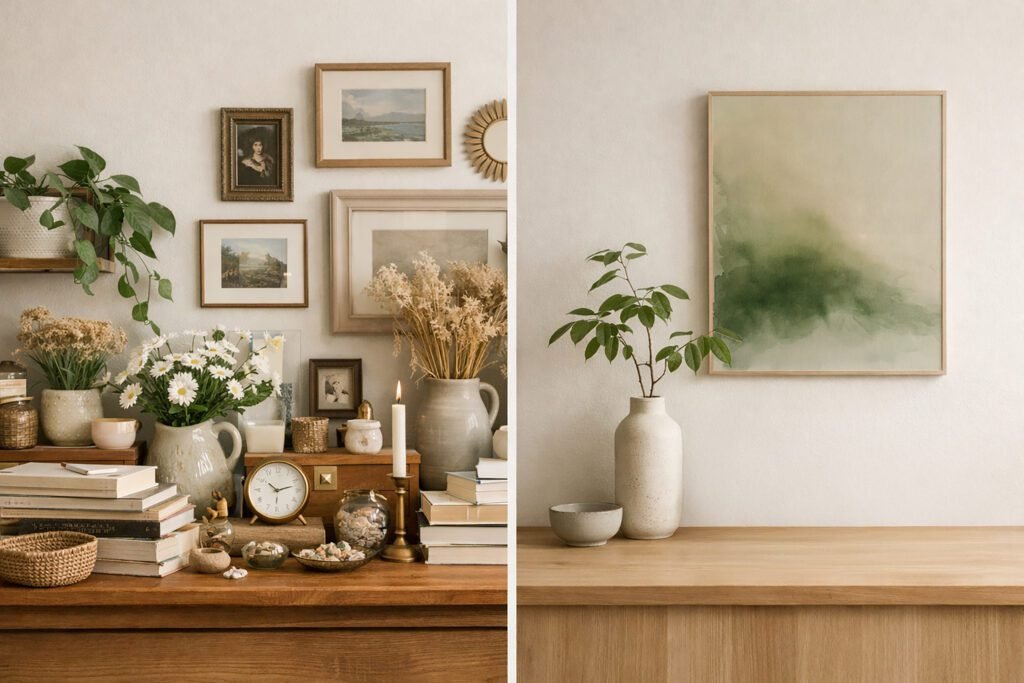
There is empirical research behind this. Studies have shown that cluttered environments can increase stress levels and impair cognitive focus. Verywell Mind explains how living in messy spaces is linked to higher cortisol levels and lower overall well-being, which makes sense if you think about how your body reacts to constant visual noise. You can read more about it here: Verywell Mind explains how clutter affects mental health.
Adding more tasks does not create calm. Reducing what demands your attention does.
Instead of asking what needs to be cleaned, a minimalist spring refresh asks what no longer needs to be there.
Less to own means less to maintain. Less to maintain means less mental noise. And that shift changes the entire experience of your home.
The Minimalist Shift – 3 Small Decisions That Change Everything
A minimalist spring refresh does not start with cleaning supplies.
It starts with decisions.
Not dramatic ones. Just small, honest ones.
1. Not Everything Deserves a Spot in Your Home
If something constantly needs to be moved, dusted, reorganized or managed, ask yourself why it is still there.
Does it serve you
Do you use it
Does it make your space feel better
If the answer is no, letting it go is not failure. It is clarity.

2. Clear One Surface Completely
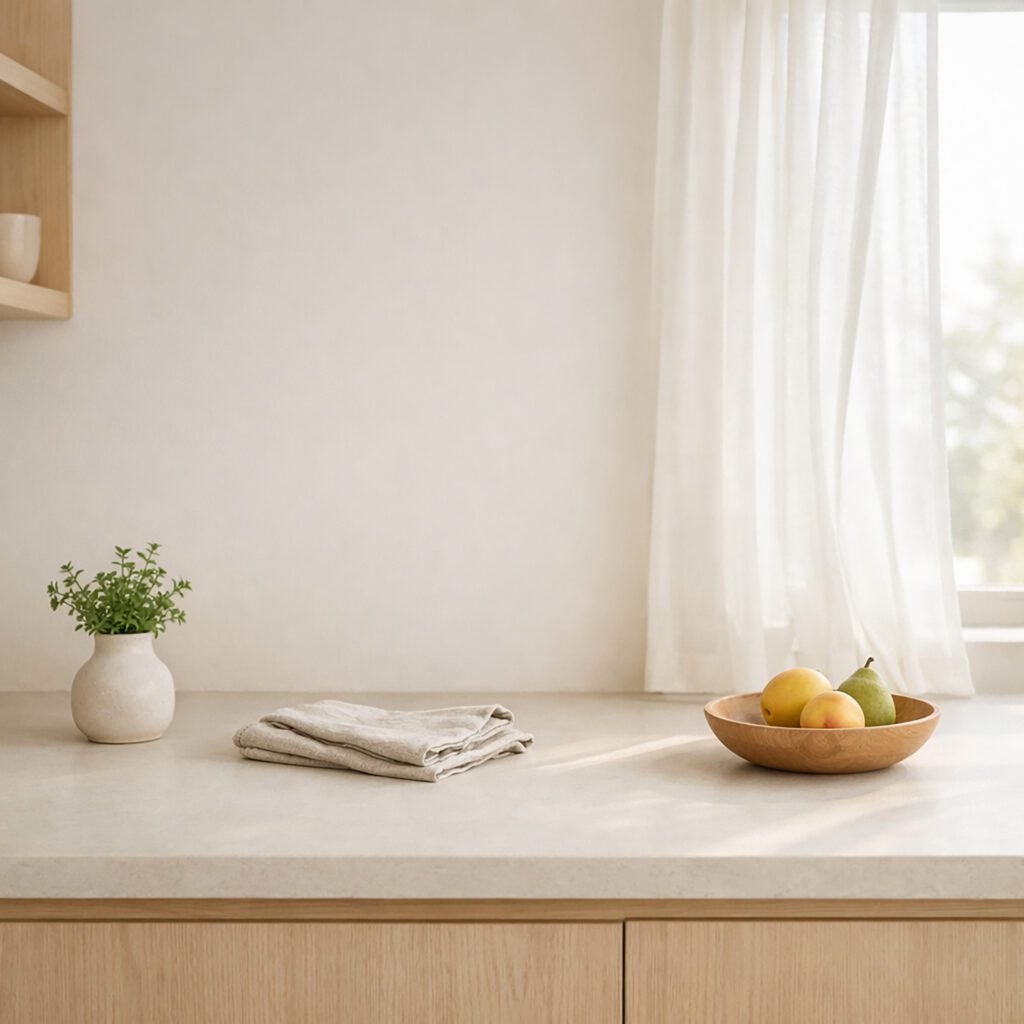
Instead of tackling the whole house, choose one visible surface. A kitchen counter. A hallway console. A bedside table.
Remove everything. Put back only what is useful or meaningful.
You will immediately feel the difference.
A clear surface is not empty. It is intentional.
3. Choose Calm Over Quantity
Japandi style works so well because it values function and quiet beauty over excess.
Natural textures. Neutral tones. Breathing space between objects.
You do not need more storage boxes. You need fewer things to store.
When your space is simpler, maintenance becomes easier. And when maintenance is easier, stress naturally lowers.

If you are drawn to this kind of calm, you might enjoy my post on Japandi Reset Routine for Calm and Intentional Living.
How to Actually Use the Minimalist Spring Refresh Checklist
Once you download the Minimalist Spring Refresh checklist, don’t rush into it.
Look at it once. Then close it.
Choose one small section that feels manageable. Not the hardest one. The easiest one. Momentum matters more than ambition.
Set a timer for 15 minutes. Work only within that time. When it rings, stop. Even if you feel like continuing. This keeps the process sustainable instead of overwhelming.

One reason clutter feels heavy is that it creates constant small decisions. Where should this go? Do I keep this? Should I deal with it later? Those tiny choices slowly drain your mental energy throughout the day.
The American Medical Association explains how decision fatigue reduces focus and makes everyday decisions harder over time. When your home constantly demands small choices, your brain never really gets a break.
Reducing objects automatically reduces decisions.
If you are tackling paper clutter, give important documents one clear home. A simple, neutral file organizer like this can prevent new piles from forming without adding visual chaos. Keep the system straightforward. One folder. Clear purpose.
When you move to visible spaces like counters or shelves, resist buying storage immediately. Remove what you do not use first. Only then decide what deserves space. Otherwise, you are just reorganizing the same weight.
This checklist works best when you treat it as maintenance, not transformation.
You are not trying to create a perfect home.
You are making your daily life easier.
What’s Inside the Minimalist Spring Refresh Checklist
I created this checklist because I needed something realistic.
Not a 40-task cleaning marathon. Not a Pinterest-perfect transformation plan. Just a clear starting point for when life already feels full.
The Minimalist Spring Refresh checklist is built around five simple areas: visible surfaces, paper clutter, wardrobe edits, storage simplification, and creating calm.
Each section focuses on reduction, not decoration. It guides you to remove what creates pressure before thinking about organizing anything new.
You will not find complicated systems inside it. No color-coded spreadsheets. No strict timelines.
Instead, you’ll find small, focused prompts that help you:
– clear what drains your attention
– simplify what you maintain daily
– create breathing space in your most used areas
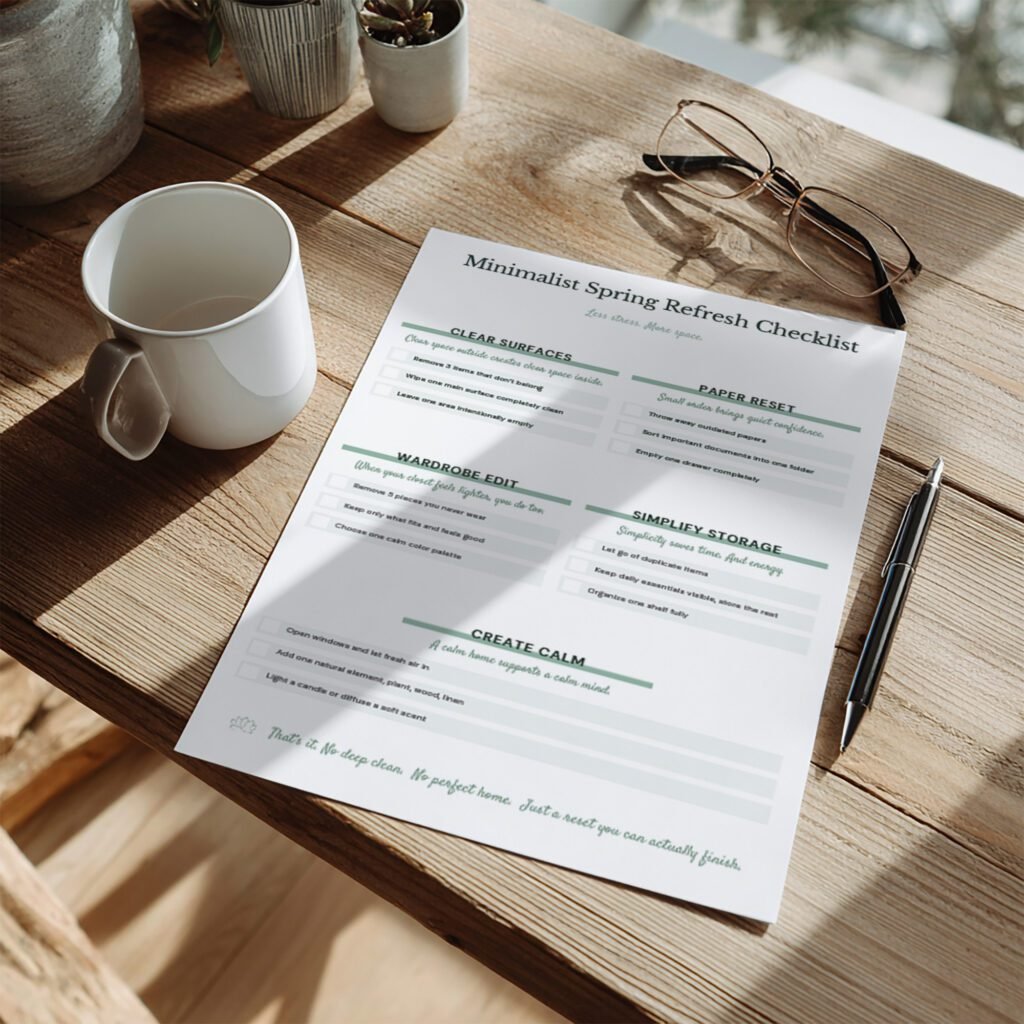
It is designed to work whether you have 15 minutes or an entire afternoon.
You can print it. Keep it digital. Use it once this season. Or return to it every few months.
The goal is not completion.
The goal is clarity.
A Softer Way Into Spring
Maybe this season doesn’t need to start with a deep clean.
Maybe it starts with one clear surface. One honest decision. One small shift toward less.
You don’t have to change your whole home in a weekend. You don’t have to do it perfectly. You just have to begin where you are.

A minimalist spring refresh is not about impressing anyone.
It’s about making your space feel supportive again.
Lighter.
Quieter.
Easier to move through.
If your home has felt heavier than usual lately, this is your gentle permission to simplify.
You can download the full Minimalist Spring Refresh checklist and start small. One section. One drawer. One surface.
Spring does not rush.
You don’t have to either.
If this feels like what you need right now, the checklist is ready for you below.
FAQ – Real Questions From Real Life
How is this different from regular spring cleaning?
Traditional spring cleaning focuses on deep cleaning everything. The Minimalist Spring Refresh focuses on reducing what needs to be cleaned in the first place.
Instead of adding more tasks, you remove what creates maintenance. It’s less about scrubbing and more about simplifying.
What if I don’t have time for a full reset?
You don’t need a full reset.
Start with 15 minutes. One surface. One drawer. One category.
Consistency matters more than intensity. Small progress done regularly creates more change than one exhausting weekend.
What if I live with family and not everyone agrees on decluttering?
Start with your own areas.
Your desk. Your wardrobe. Your side of the bed. When others see the shift in energy and ease, they often become more open to it.
You cannot control everyone’s habits. You can influence the atmosphere by example.
I’m afraid I’ll regret getting rid of things. What should I do?
If you’re unsure, create a temporary “pause box.”
Place uncertain items inside and store it out of sight for 30 days. If you don’t look for them or miss them, you likely don’t need them.
This removes the emotional pressure from decision-making.
Do I need to buy storage solutions to make this work?
No.
In fact, buying storage too early often hides clutter instead of solving it.
Reduce first. Then evaluate what actually needs a container.
Simple, neutral organizers are enough. The goal is fewer systems, not more.
What if my home still doesn’t feel calm after decluttering?
Clutter is only one layer.
Lighting, color palette, and visual density also affect how a space feels. Try adding natural light, soft textiles, or one intentional focal point instead of multiple small decorative items.
Calm usually comes from space and simplicity, not decoration.
How often should I repeat this checklist?
Seasonally works well.
But you can also revisit one section whenever your space starts to feel heavy again. The checklist is a tool, not a schedule.
Here’s to lighter rooms, slower mornings, and spaces that finally feel like they support you. Clear a little. Breathe deeper. Let this spring feel softer than the last.
With warmth,
Monika @ Affylife 🤍